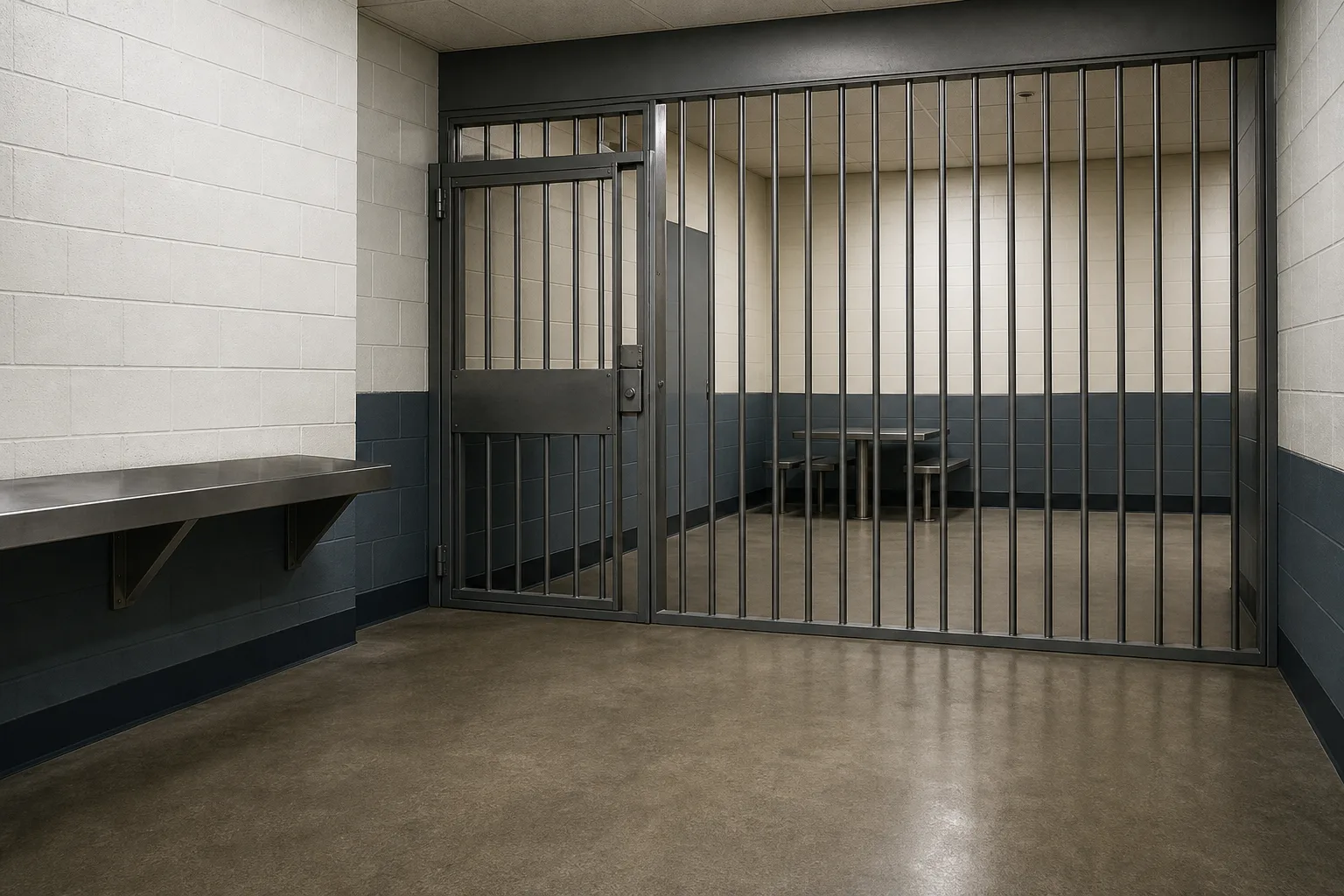
The courtroom trial, with witnesses and a jury and a verdict read aloud, is the version of criminal court that most people picture, and it is the version that almost never happens. State felony cases overwhelmingly resolve by plea, dismissal, or diversion, and they resolve at a series of ordinary-looking hearings that pass in a few minutes each. That is not a failure of the system so much as a description of it. The consequence for a defendant is that the decisions that determine the outcome arrive early, arrive fast, and are made under pressure, often before anyone has read the whole file.
The first appearance sets the price of everything after it
Within a day or three of arrest, depending on the county, a judge sets conditions of release. Whether a person goes home matters far beyond comfort. Someone in custody loses a job, misses rent, cannot gather phone records or find the neighbor who saw the whole thing, and meets counsel in a twenty-minute video call. That person takes worse offers, and takes them sooner. The costs at this stage are concrete: a bond premium of roughly ten percent to a surety, which is never refunded, or a cash deposit that eventually comes back, or supervision fees and electronic monitoring charges billed weekly to the defendant.
Waiving the preliminary hearing, and what goes with it
In most states a felony must clear a probable cause screen, either a preliminary hearing before a judge or an indictment by a grand jury. Prosecutors frequently offer something small in exchange for a waiver, and the waiver is often the right call, because the hearing can lock in a shaky witness's story while it is still fresh in a helpful way for the state. But it is a real trade. A hearing puts an officer under oath early, produces a transcript, and shows defense counsel how the case is actually built rather than how the report summarizes it. Waiving costs you that preview, and the transcript you would have used later.
Discovery and motions, where leverage is actually built
Between arraignment and disposition sits the part of the case that generates the outcome: the discovery request, the body camera footage nobody has watched all the way through, the lab report that has not come back, the motion to suppress a stop or a statement. This is also the part that costs money, because it is where attorney hours go. Ask a Criminal Defense Attorney whether the quoted fee includes litigating a suppression motion, or whether that is billed separately once the case passes a defined stage. Investigators, forensic consultants, and transcript orders are usually additional, and are usually worth authorizing when the disputed fact is the case.
The offer, and the record it leaves behind
A plea offer has two prices. The first is the sentence, and it is the one everyone discusses: jail or probation, the length of supervision, restitution, fines, court costs, and the monthly probation fee that continues for years. The second price is the conviction itself, and it outlasts the sentence. A felony record affects professional licenses, firearm rights, immigration status, public housing eligibility, and employment screening long after the case number closes. The Bureau of Justice Statistics, which tracks how felony cases move through state courts, exists partly because these dispositions are the system's real output. Ask what the plea is called on paper, not just what it costs this year.
Timing, and why the same plea gets more expensive
Offers are perishable. Many prosecutors' offices operate on an informal schedule in which the best terms appear early, before a file is assigned to a trial attorney or before a victim has been contacted about her preferences. Rejecting an early offer to litigate a suppression motion is a legitimate strategy, and sometimes the only sensible one, but it should be a decision with a stated theory rather than a delay. Diversion programs and deferred adjudication, where available, often have their own deadlines, eligibility screens, and program fees paid up front. The cost of missing a window is that the same facts later buy a worse deal.
Almost none of this happens at a moment that feels like a turning point. It happens in a hallway conversation before a docket call, or in a phone call about whether to accept a continuance. What separates a good outcome from a poor one is usually that someone wrote down, in advance, what each option would cost in money, in custody, in leverage, and in permanent record, and then chose deliberately among them.